
Contents
The brief
The Toptrail online store with a configurator was built to sell roof tents for Volkswagen campers; the store was developed by CREATING.LV. A tent has to fit a specific camper model and the buyer’s choices, so a standard product list is not enough: the store needed to let customers find the right tent for their camper themselves and customise it without contacting a salesperson.
The second requirement was international. The store is also intended for buyers outside Latvia, so ordering, payment and shipping had to work worldwide. The project was handed over in 2026, but the store has not yet been launched publicly, so this case study describes the solution as delivered, not how it performs with real orders.
Our role
The configurator is entirely our own development — from the idea and design to implementation; it is not an adapted off-the-shelf plugin. CREATING.LV also built the store itself on WordPress and WooCommerce, its design, the checkout with Stripe and PayPal payments, UPS shipping with integrated shipping cost calculation, and the blog section.
Here, the order of choices and the price calculation depend on the specific product: from the camper model to the shape of the windows. A separately developed configurator lets this logic follow the product, rather than bending the product to fit a ready-made plugin, and it can be changed later independently of third-party plugin updates.
Project views
 — enlarge image
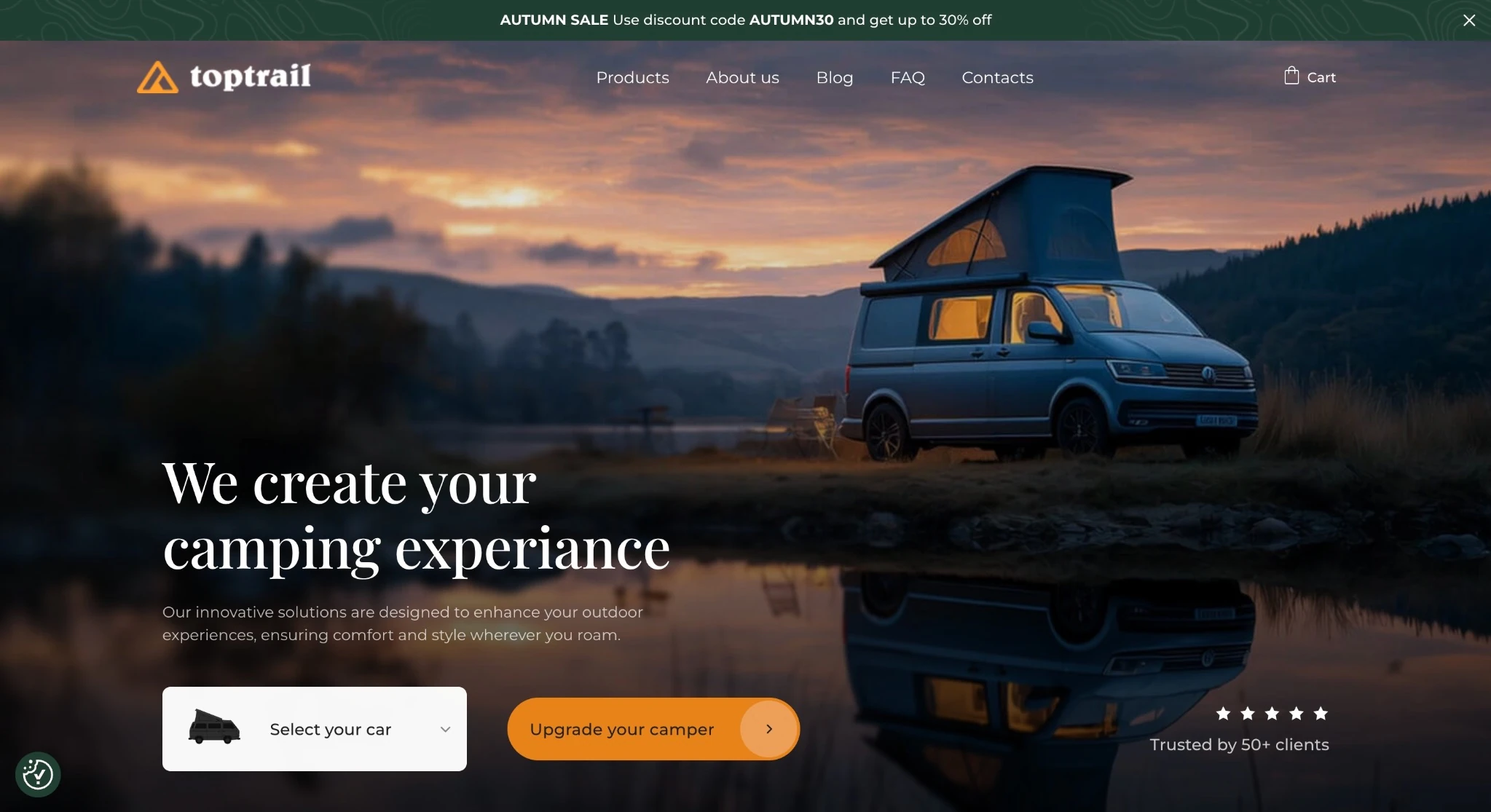
Home page design 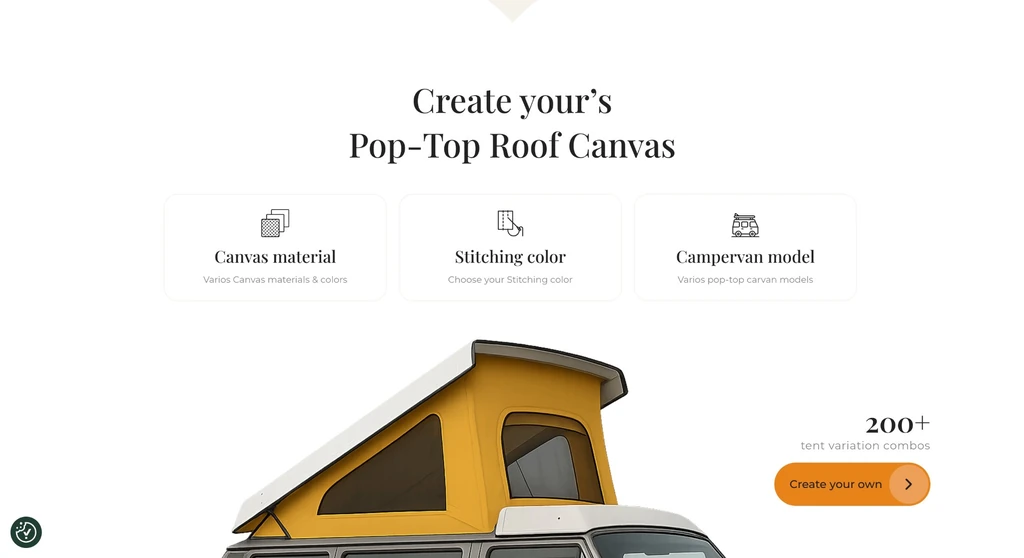 — enlarge image
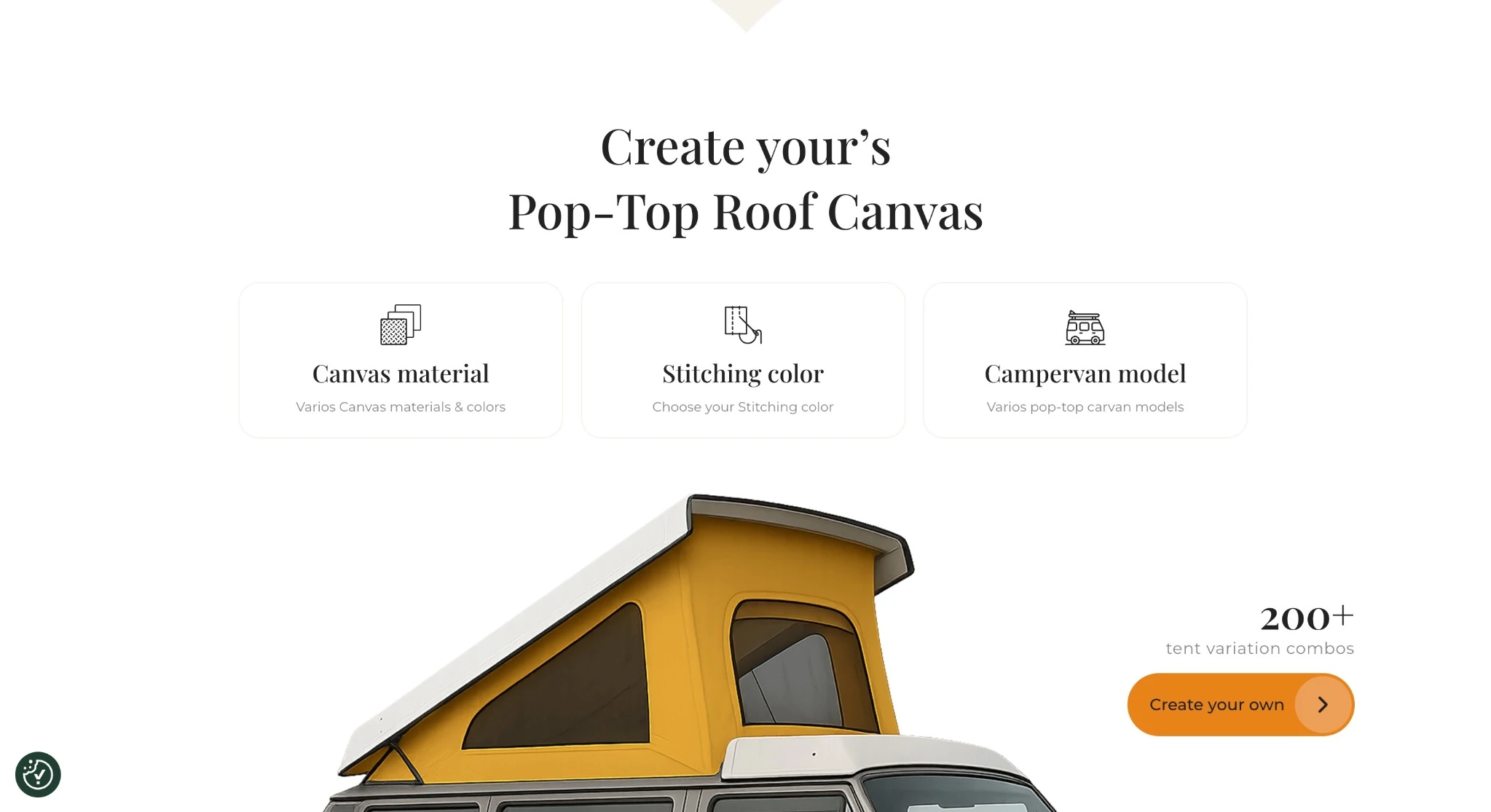
Tent customisation presentation 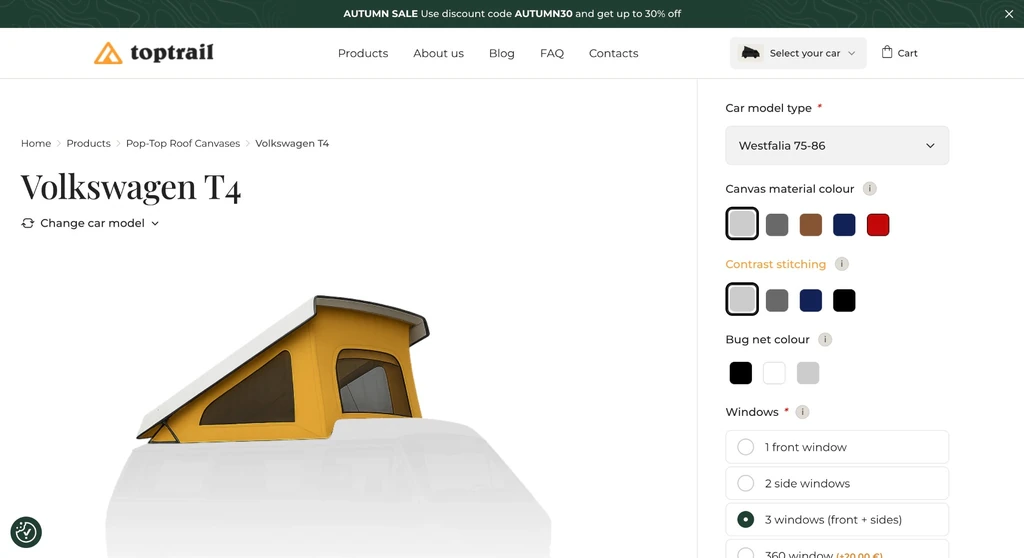 — enlarge image
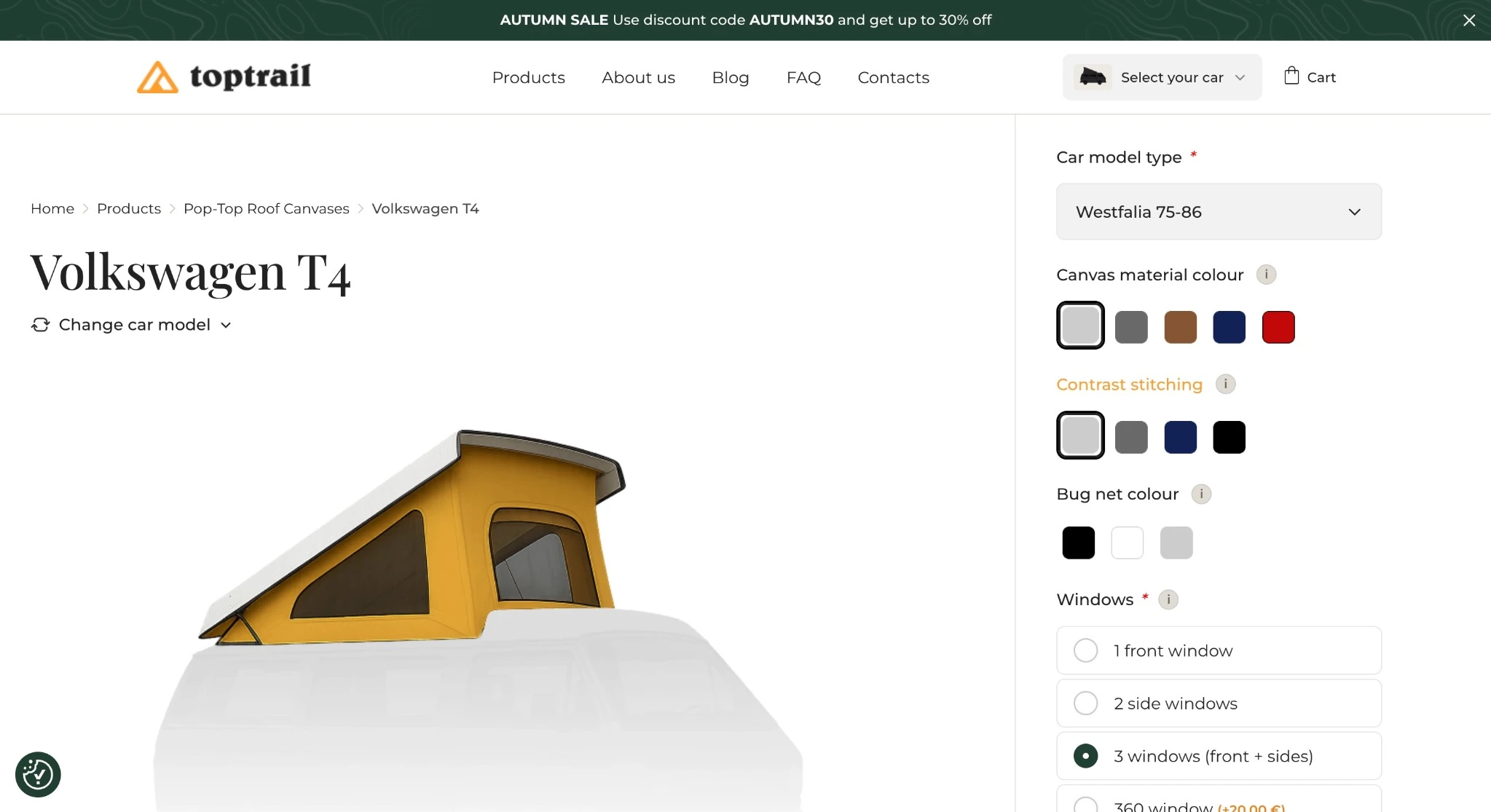
Product configurator interface 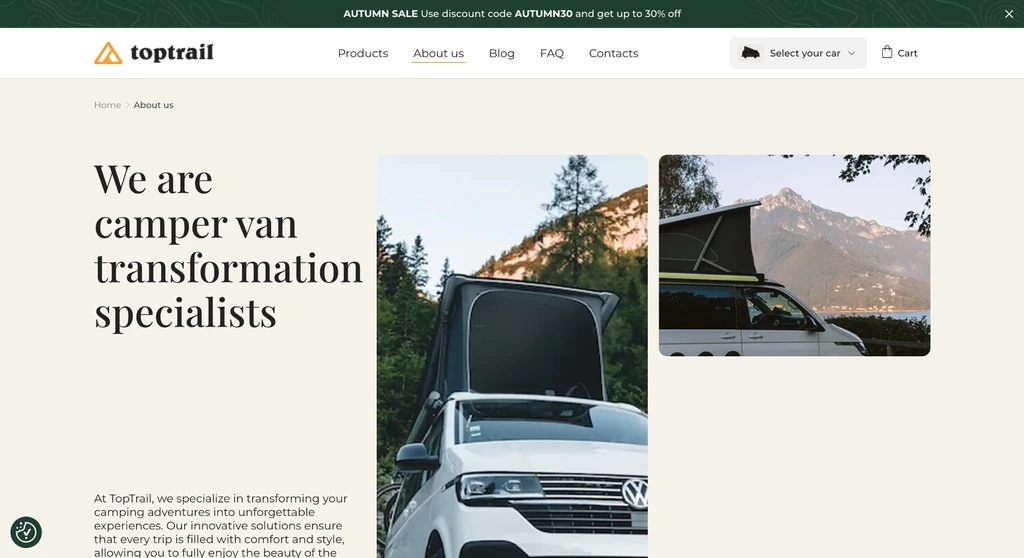 — enlarge image
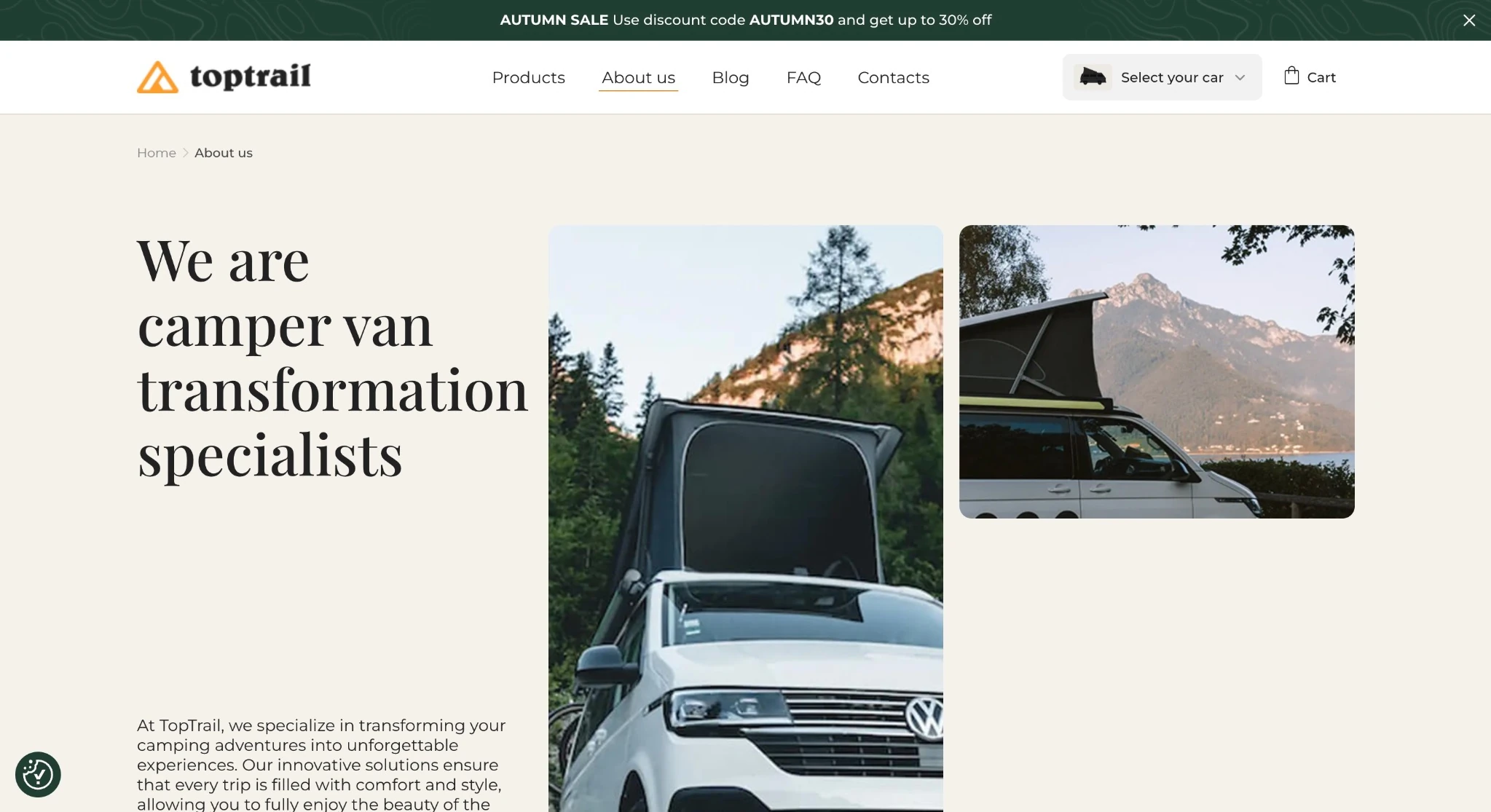
Brand presentation page 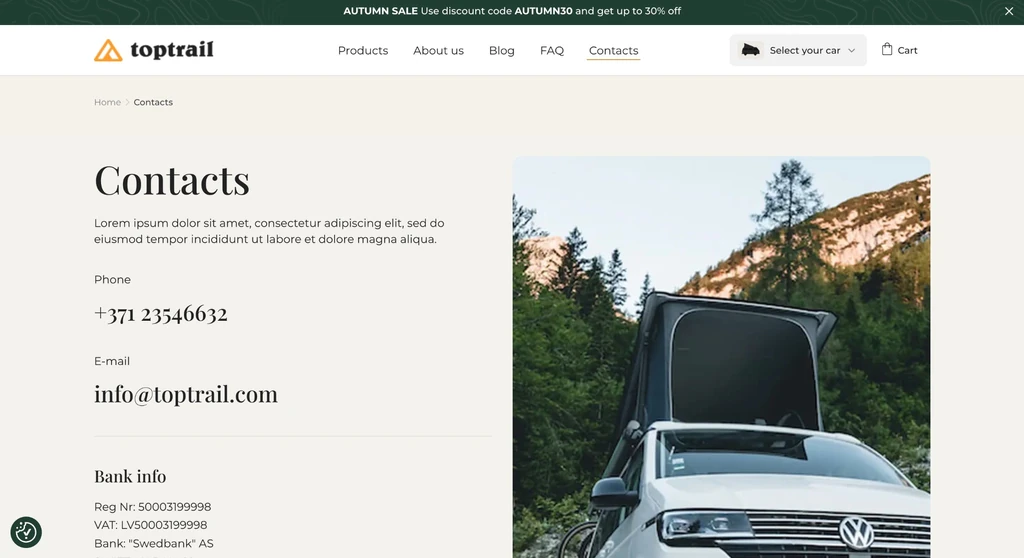 — enlarge image
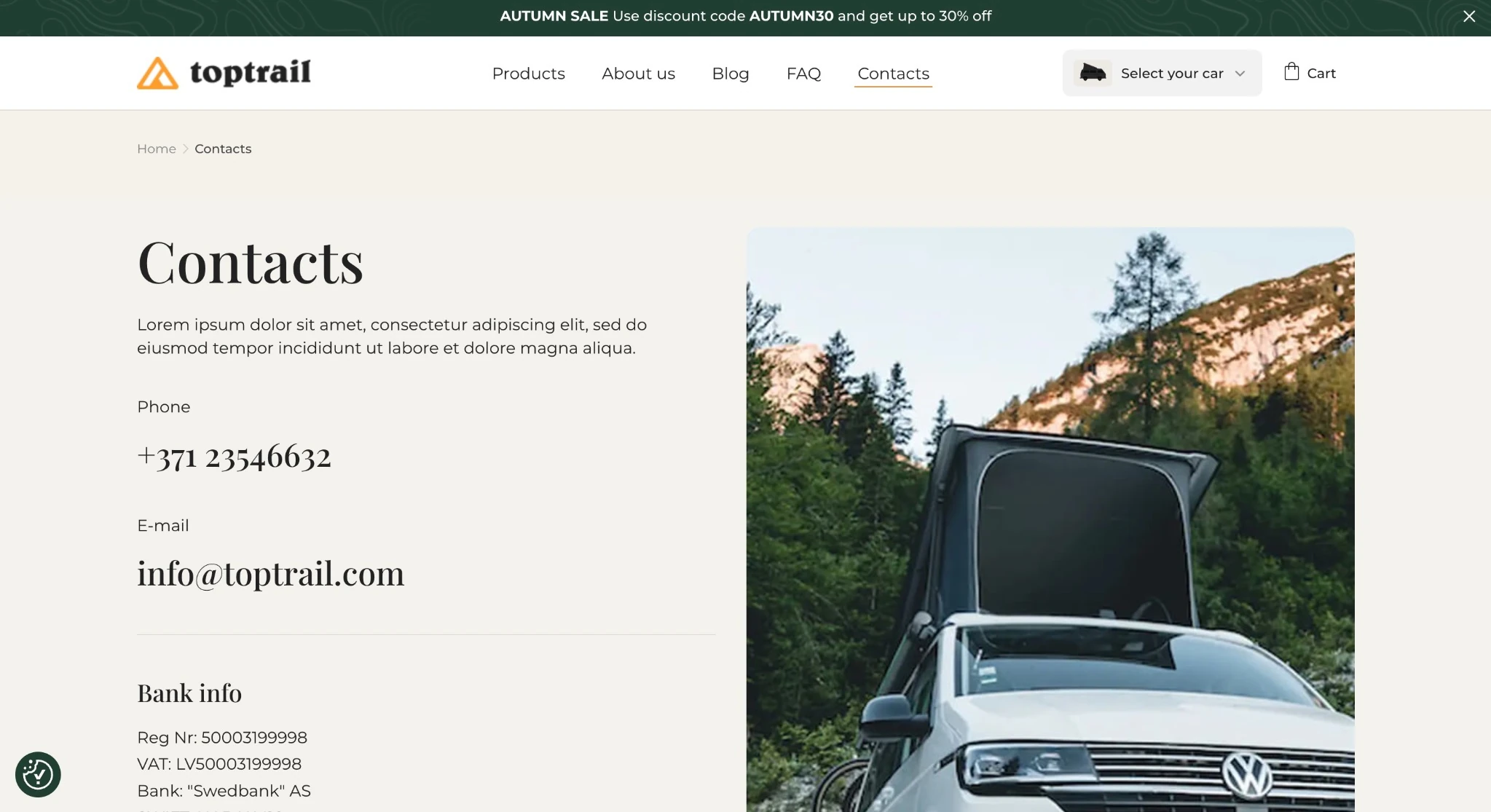
Contact page design 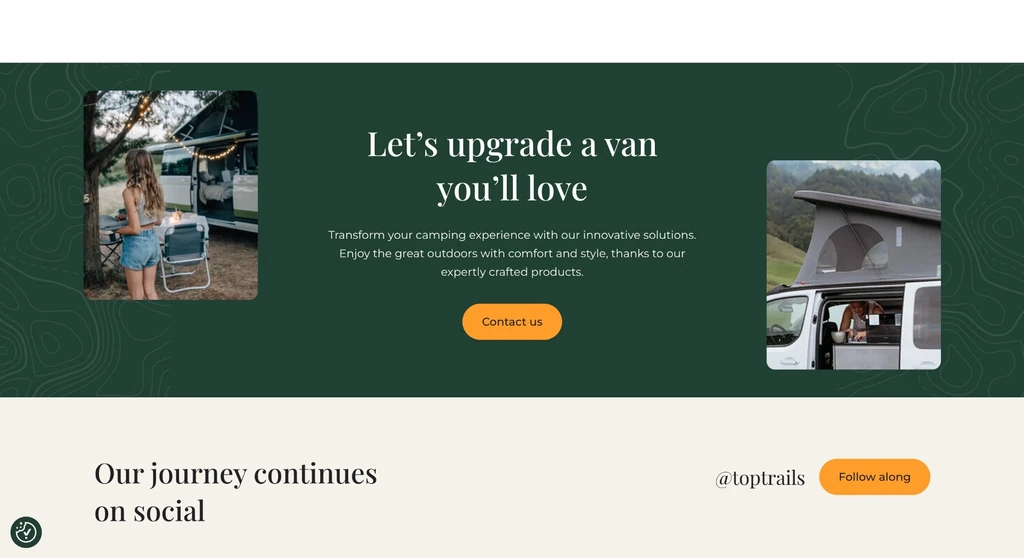 — enlarge image
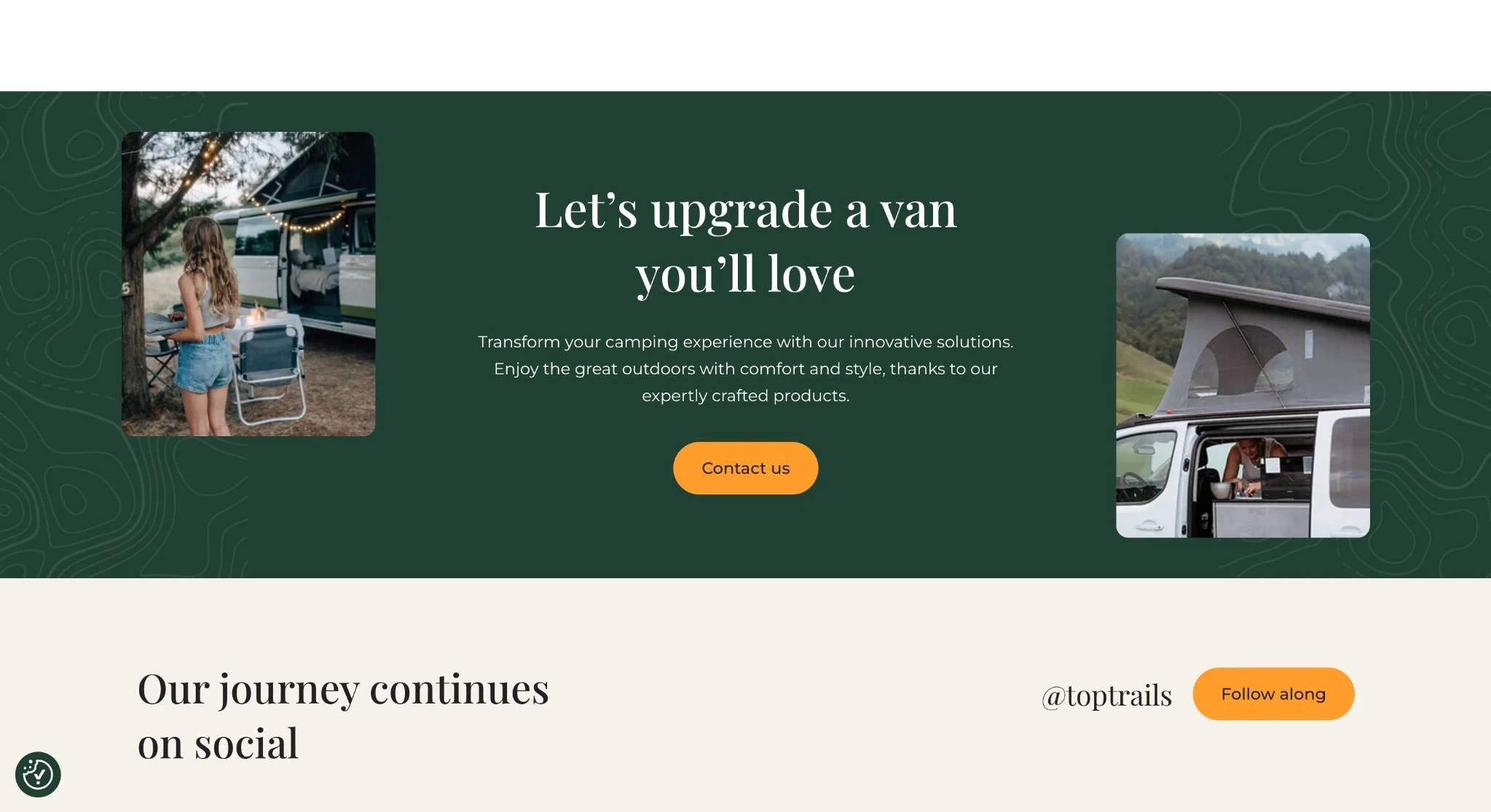
Call to get in touch 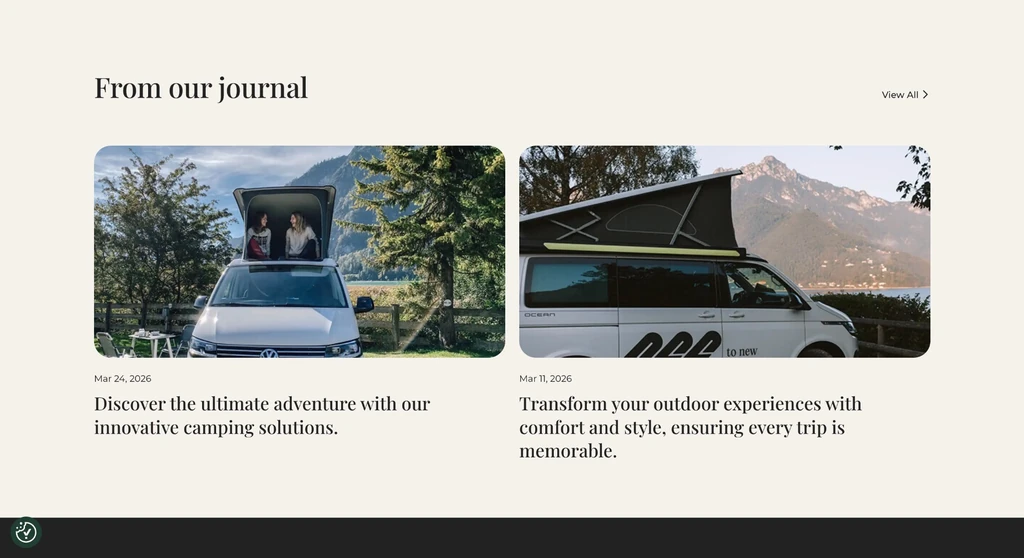 — enlarge image
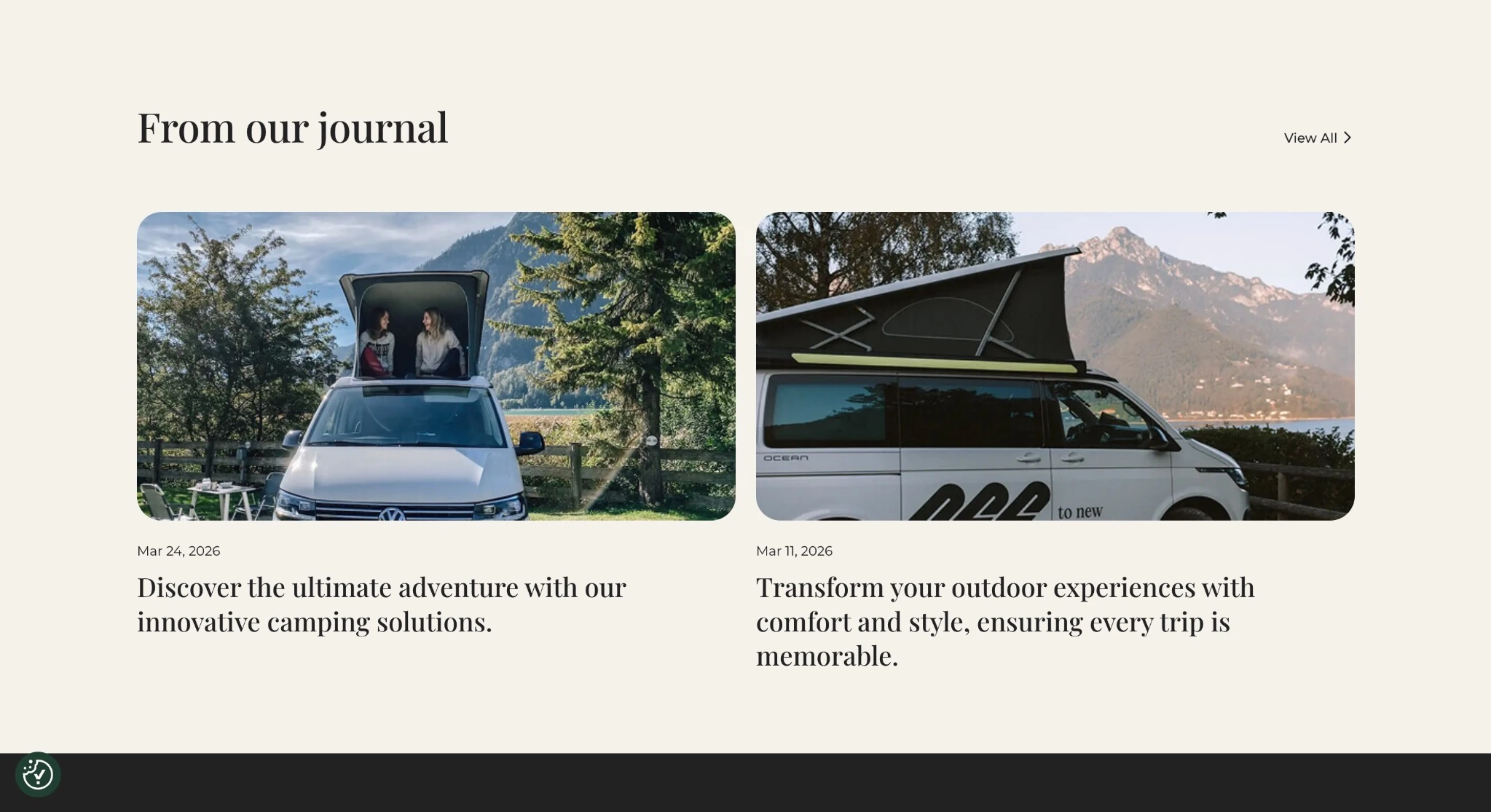
Articles section design 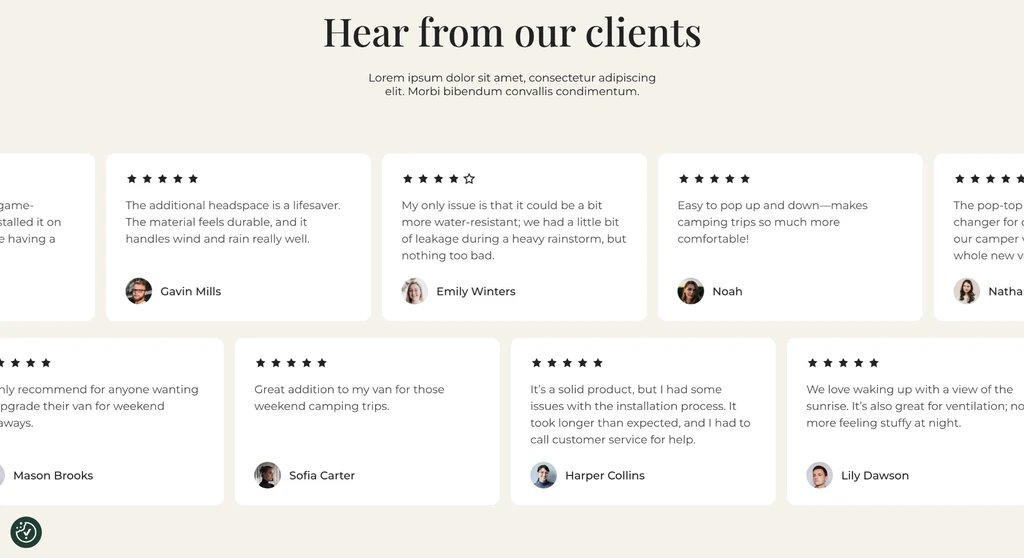 — enlarge image
Reviews section design
How the online store with a configurator works
In the configurator, the buyer goes through several choices:
- they choose their Volkswagen camper model, and the configurator shows the matching roof tent;
- they choose the fabric colour and the thread colour;
- they set the number, position and shape of the windows.
The sequence starts with the camper model because the roof tent has to fit a specific vehicle: buyers should first see only the options that fit their camper. The fabric and thread colours determine how the tent looks, while the number, position and shape of the windows also affect how it is used — for example, how much light and view there is inside the tent. Without the configurator these choices would have to be clarified in correspondence with the seller, but in the configurator buyers make them themselves, step by step.
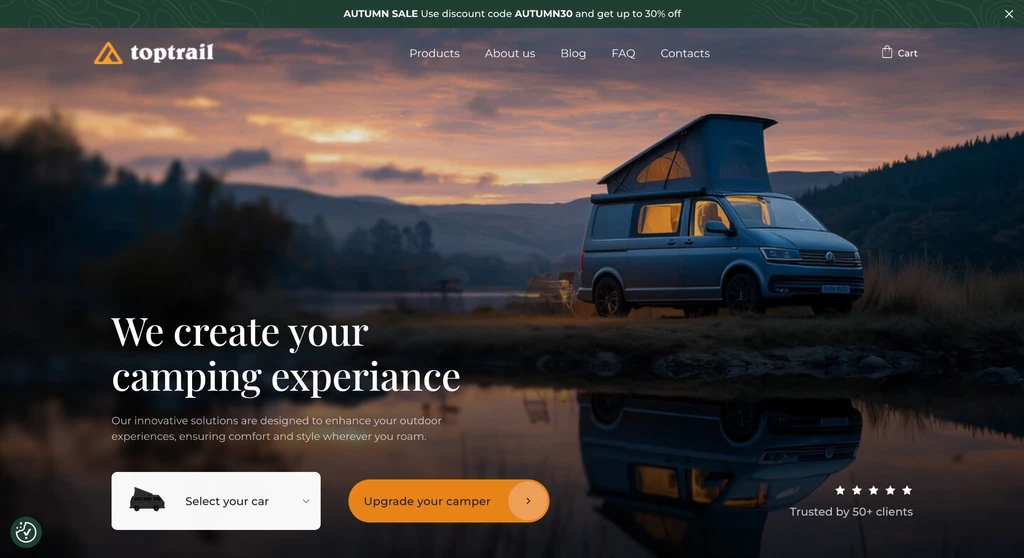
The project views show the configurator for a Volkswagen T4 tent with colour and window option fields. The vehicle model selection is already on the home page, so the buyer starts from their own camper instead of searching the catalogue.
The final price while configuring
In this WooCommerce store the price is calculated in real time: the final price is visible during configuration, not only in the basket. Buyers can compare options before adding the tent to the basket, and the seller does not have to prepare a separate quote for each combination.
The configuration is part of the WooCommerce product logic, so the customised tent goes into the basket as one item with the buyer’s choices, not as a separate message to the seller. For a made-to-order product this matters: the order already states which camper the tent is for, in which colours and with which windows.
Payment with Stripe and PayPal, shipping with UPS
After configuring, the buyer continues in the same store: adds the tent to the basket, enters the delivery details, chooses a payment method and confirms the order. Two payment services are integrated — Stripe and PayPal.
Stripe is the payment service through which the store accepts card payments, while PayPal lets buyers pay from their PayPal account. Two payment methods let buyers choose the one they are used to. Both services work in many countries, which suits a store that is also meant for buyers outside Latvia.
UPS is integrated for shipping, with the shipping cost calculated in the store itself. The cost of international shipping depends on the destination, so it cannot be shown as one fixed amount for all buyers. Buyers outside Latvia see the shipping cost during checkout, and the seller does not have to calculate and agree it for each order. This way the solution is adapted to international buyers in terms of both payment and shipping.
Design and use on a phone
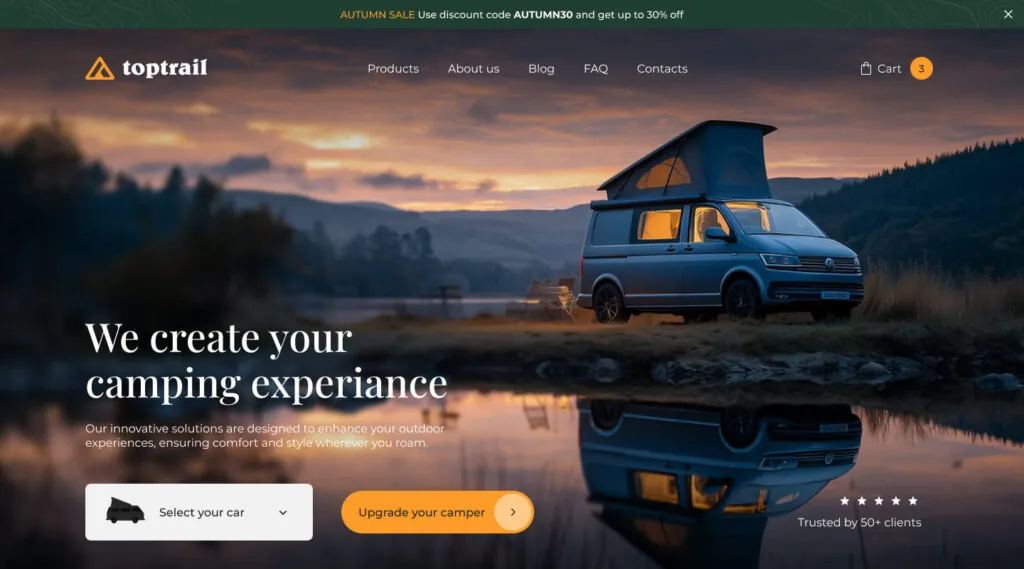
The design is built around configuring the product. The home page shows a camper at sunset and the vehicle model selection, and a separate section explains tent customisation — materials, stitching and the camper model. This way buyers understand what they can change, and why, before they open the configurator. The store works on both desktop and mobile devices; the configurator’s option fields and the price have to stay clear on a narrow phone screen too.
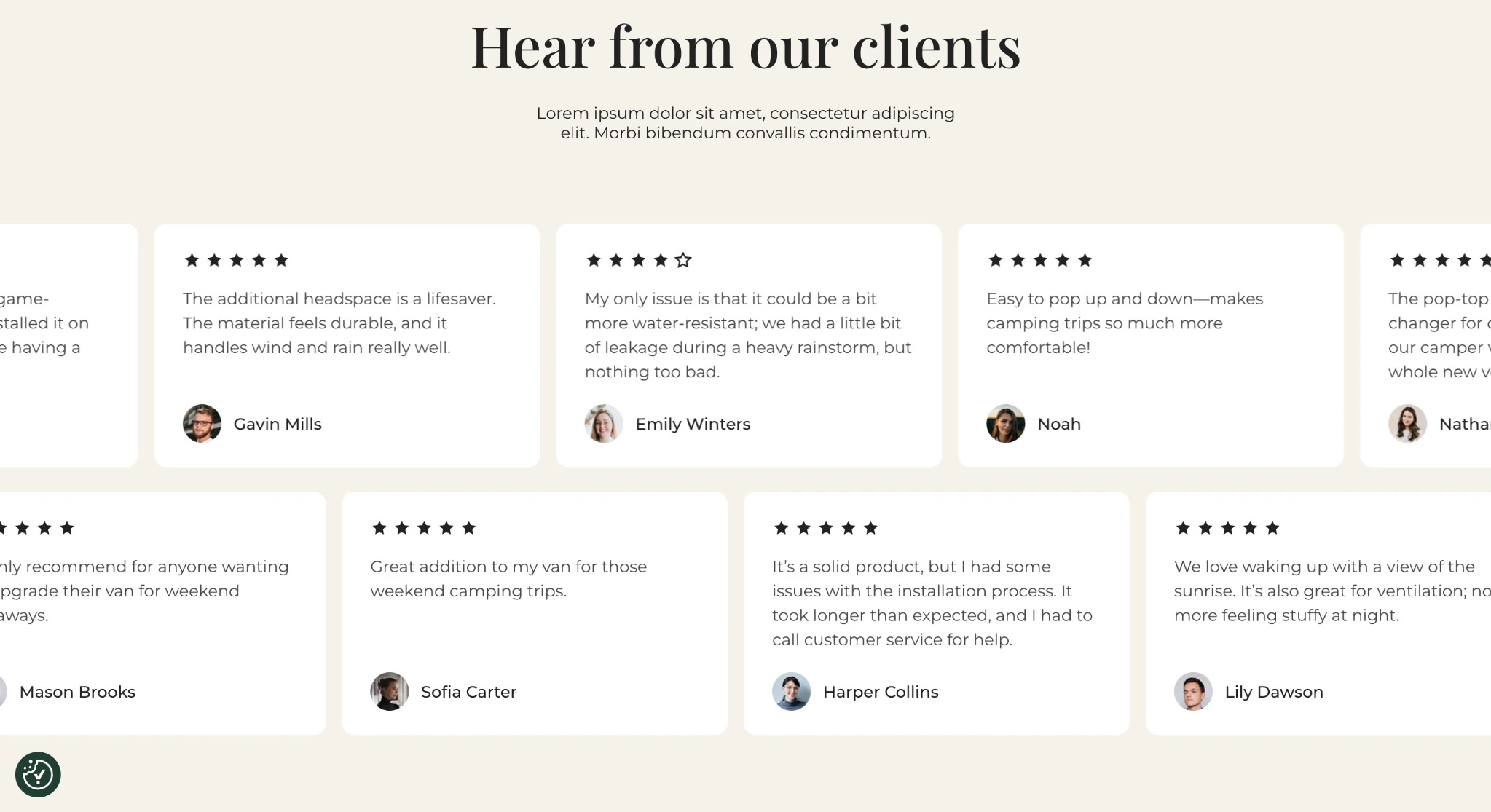
Design was also created for the “About us” and “Contact” pages, the call to get in touch and the reviews section. The brand presentation and the call to get in touch use photos of campers, and in the reviews section the cards are arranged in two rows.
Articles about the camper lifestyle
In addition to the store, we created a blog section for articles about using the products and the camper lifestyle; in the design views the articles are shown as cards. The blog can say more about using the tents than a product description allows. The blog runs on the same WordPress site, so the articles and the store are in one system and one design.
Technologies
WordPress, WooCommerce, our own product configurator, Stripe, PayPal and UPS shipping integration.
WordPress provides the pages and the blog, and WooCommerce provides the products, basket, checkout and order management. The configurator runs inside the WooCommerce store, so pages, articles, products and orders are all managed in one WordPress admin panel.
Who this solution suits
An online store with a configurator suits companies whose products buyers customise themselves and whose price depends on those choices — for example, made-to-order products, accessories for specific vehicle models, or products with many colour and size combinations. A product configurator then replaces back-and-forth messages about every variant with a clear choice and a clear price.
For similar projects we offer WooCommerce online store development. If the product logic is so specific that a ready-made plugin does not cover it, it is programmed separately — which is why this project also used custom system development. How custom product logic is added to a WooCommerce store is explained in the article on the main components of a WooCommerce online store.
Services we used
Note
This portfolio entry reflects the solution as delivered at handover. The current website may have changed.