
Contents
The brief
The Jūrmala public transport website is a passenger information site for bus services in Jūrmala, and it was built by CREATING.LV: the web design, a custom WordPress theme, content sections and integration with a GPS service via an API. The client for the project was previously Tukuma Auto SIA, now HANSABUSS Latvija SIA. Even after this change, the site runs at the same address and with the same theme. The project was handed over in 2025.
The task was to create a clear site with information about bus routes, tickets and passes and the carrier in one place, as well as a way to contact the service provider. The main challenge was to show GPS data about the buses in a way that passengers can understand and take in quickly.
A public transport site is used by very different people — regular passengers checking for changes and visitors to the city seeing the routes for the first time. That is why the information has to be organised around passengers’ questions: which route runs, how much a trip costs and where to go with a question.
Our role
CREATING.LV built the website on WordPress with a theme of our own. The scope of work:
- web design and site structure;
- a custom-built WordPress theme;
- content sections on routes, tickets and passes and the carrier;
- a way to contact the carrier;
- integration with a separate GPS service via its API;
- an interface adapted for use on a phone.
The result is the Jūrmala public transport website, where routes, tickets, contacts and GPS data about the buses are on one site with a consistent design. A consistent design means that the routes, tickets and contacts sections look and work in a similar way, so passengers do not have to work out again in each section where the information they need is.
Project views
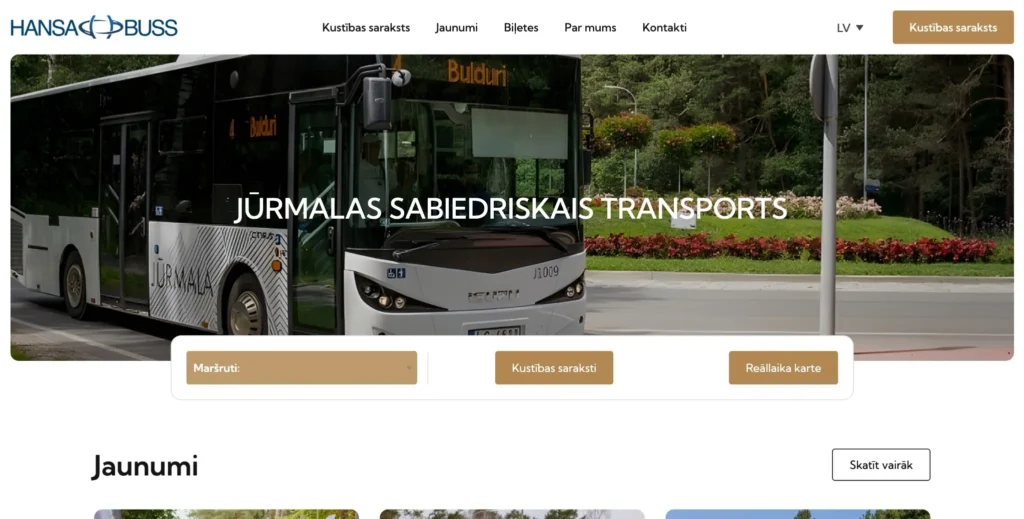 — enlarge image
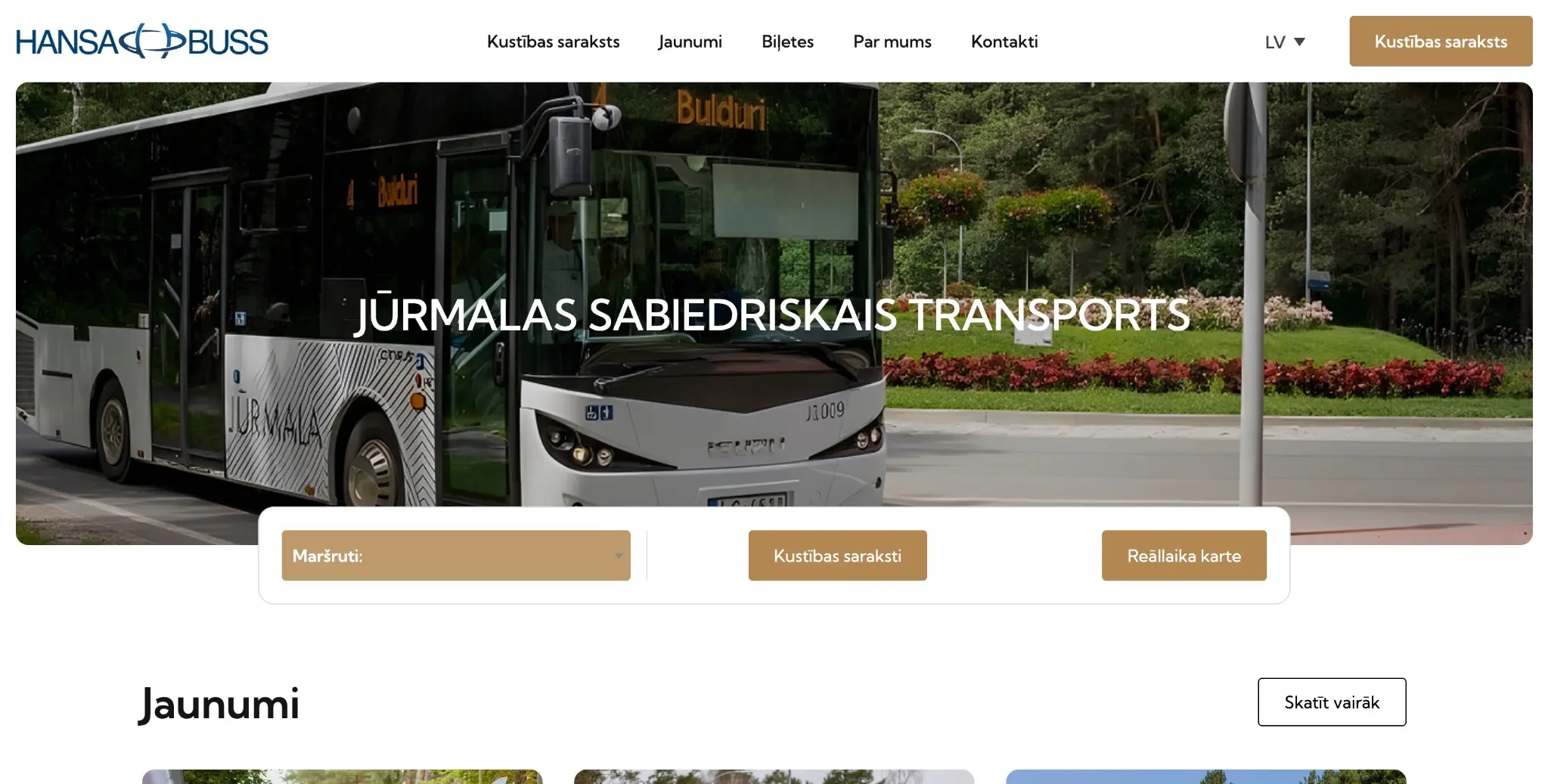
Home page 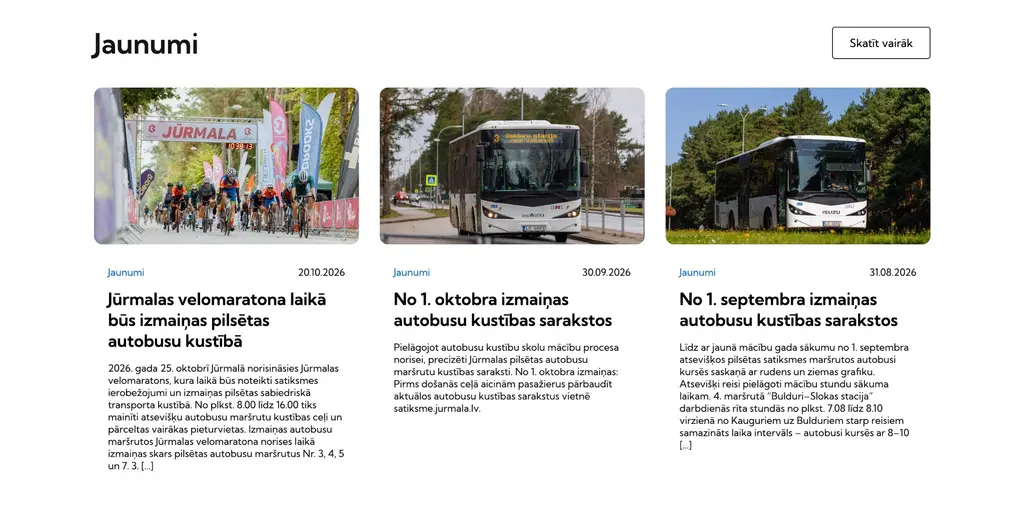 — enlarge image
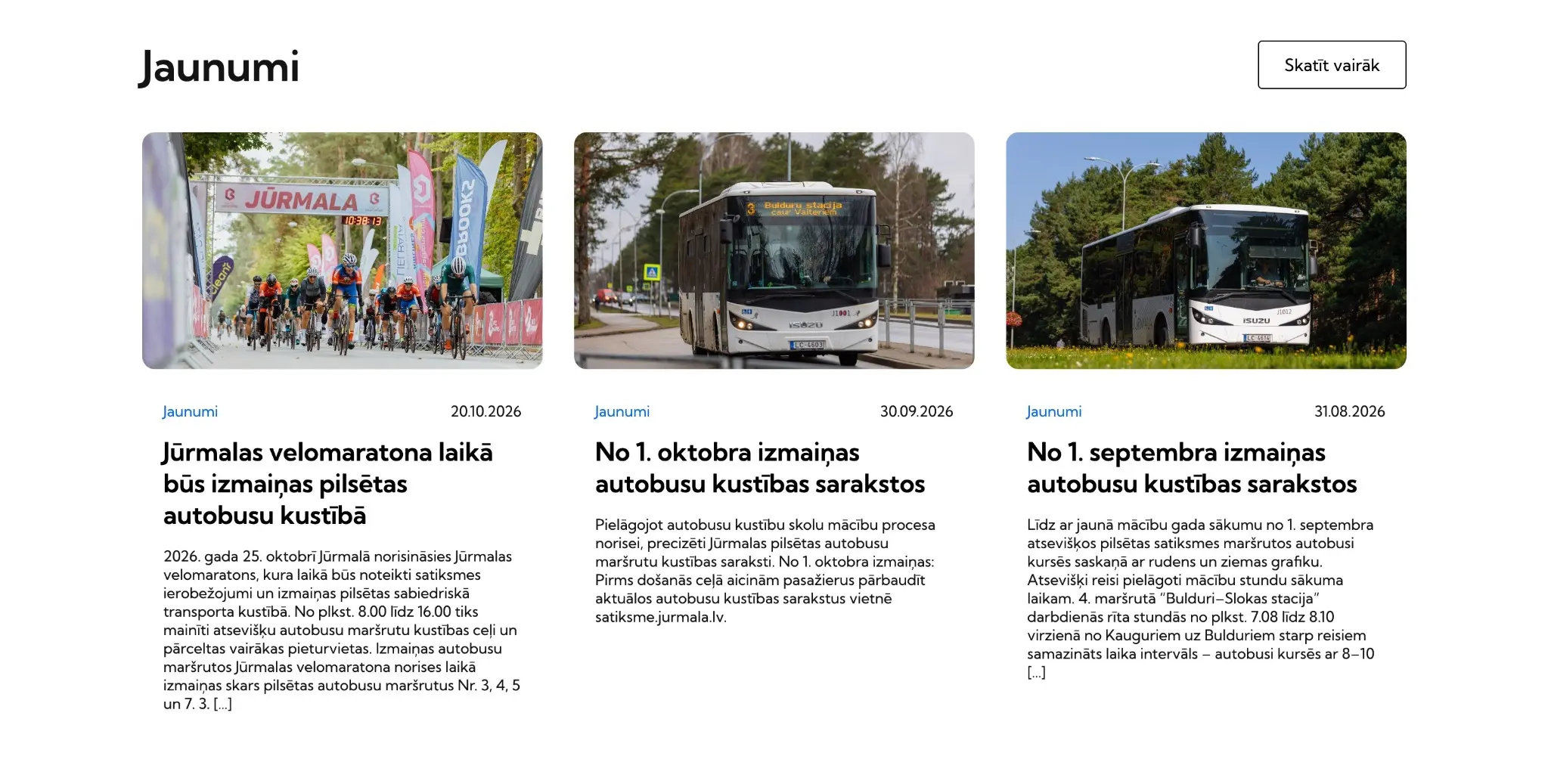
News 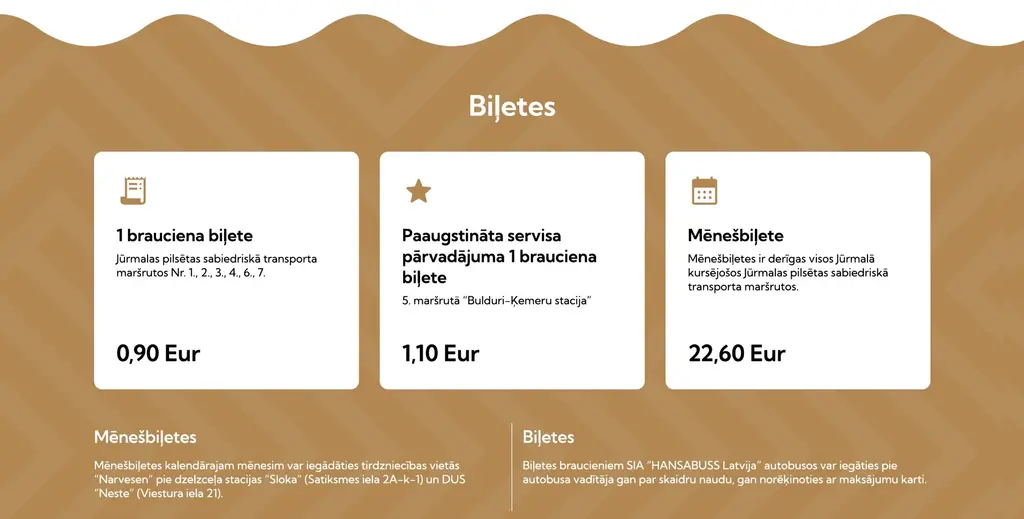 — enlarge image
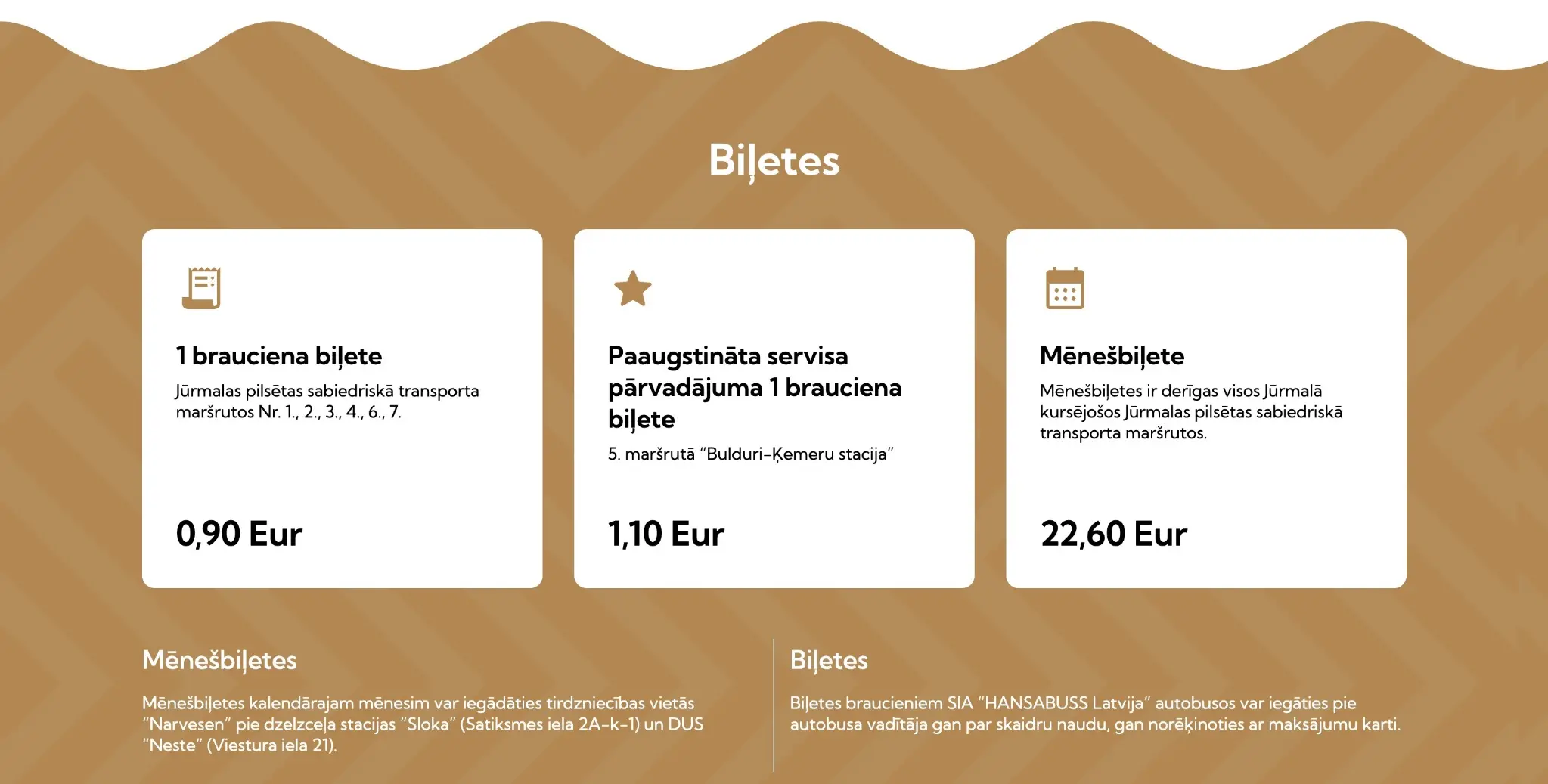
Ticket prices 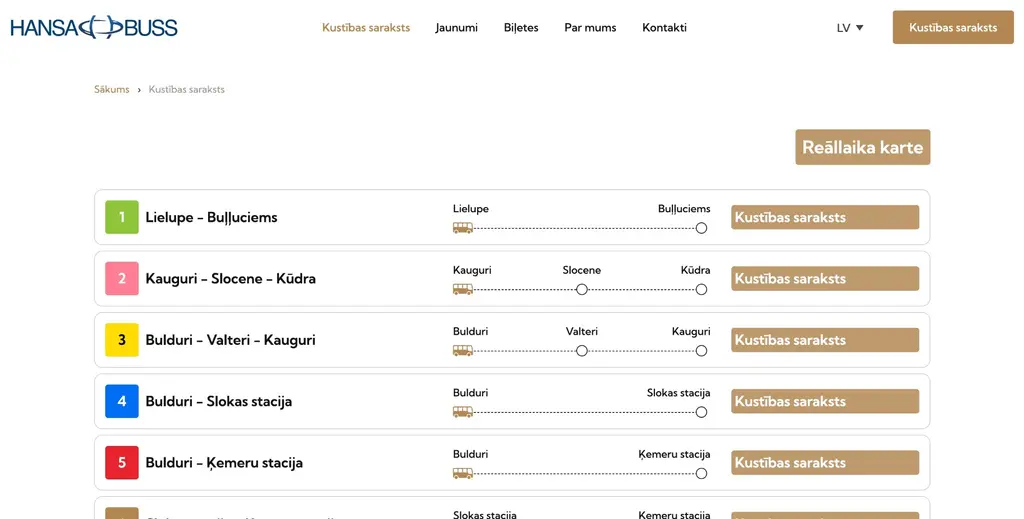 — enlarge image
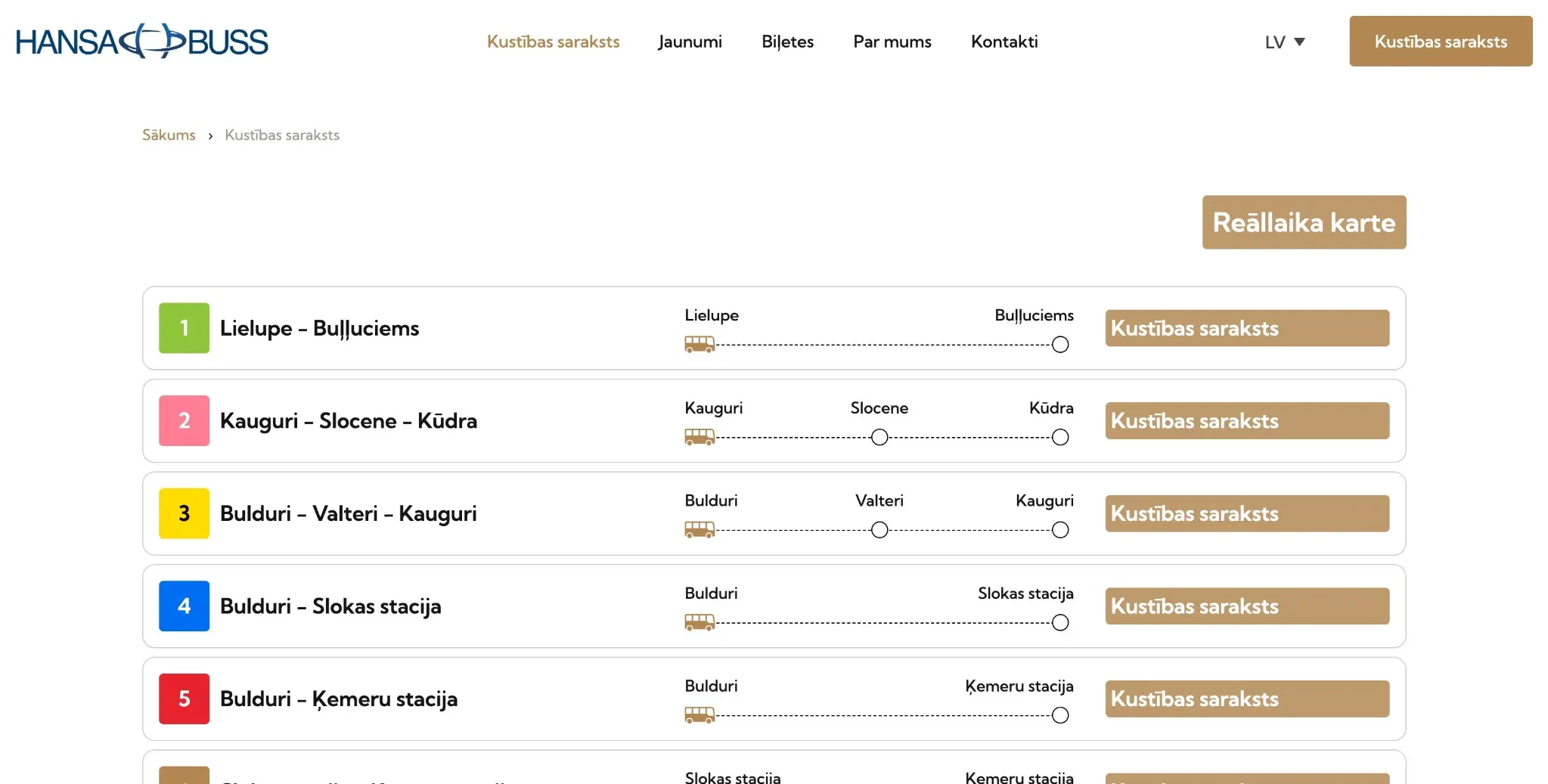
Routes 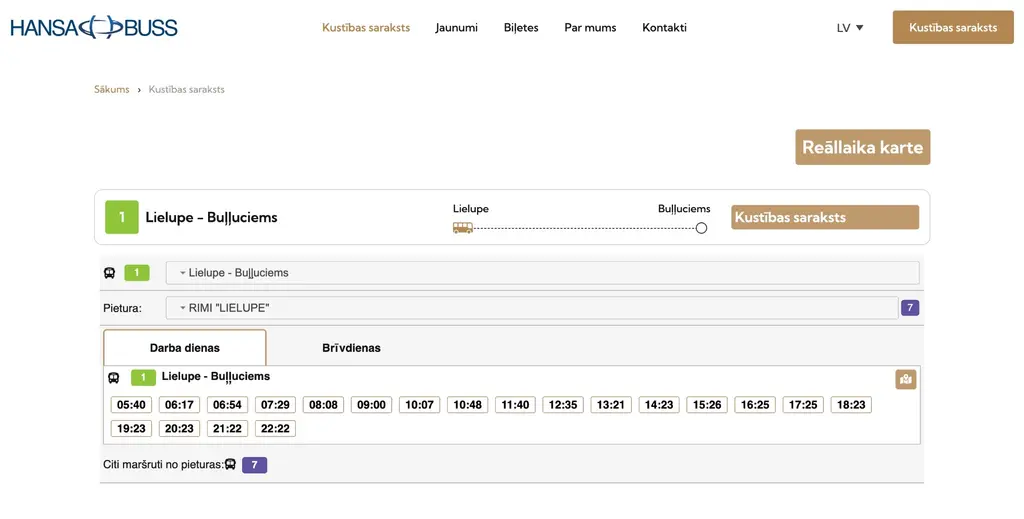 — enlarge image
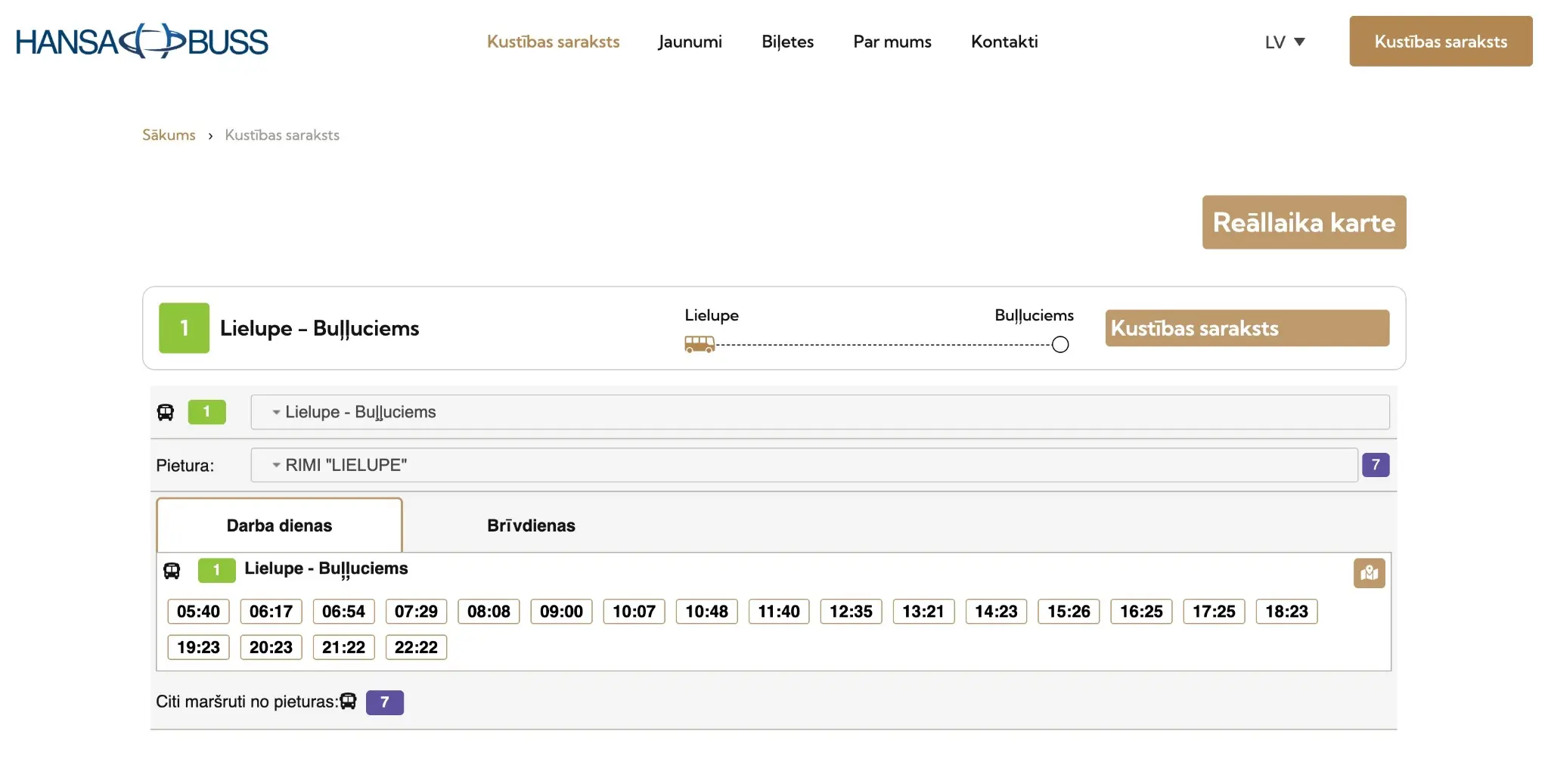
Timetable 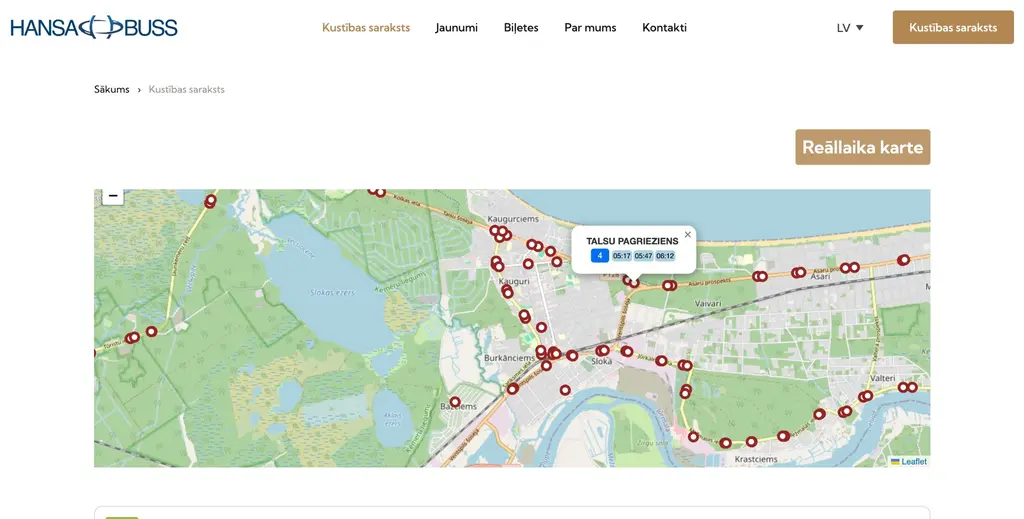 — enlarge image
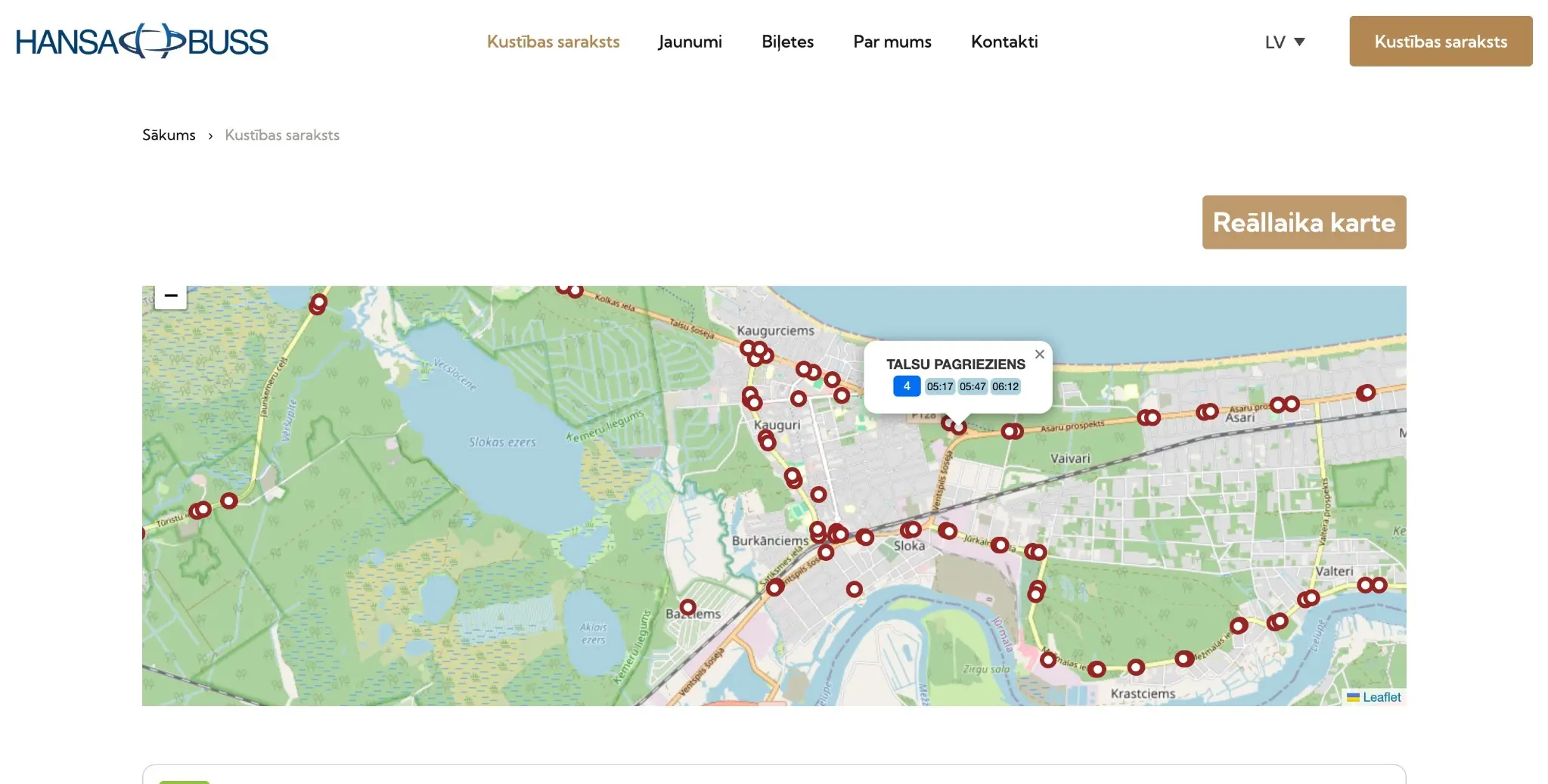
Stop map and departure times 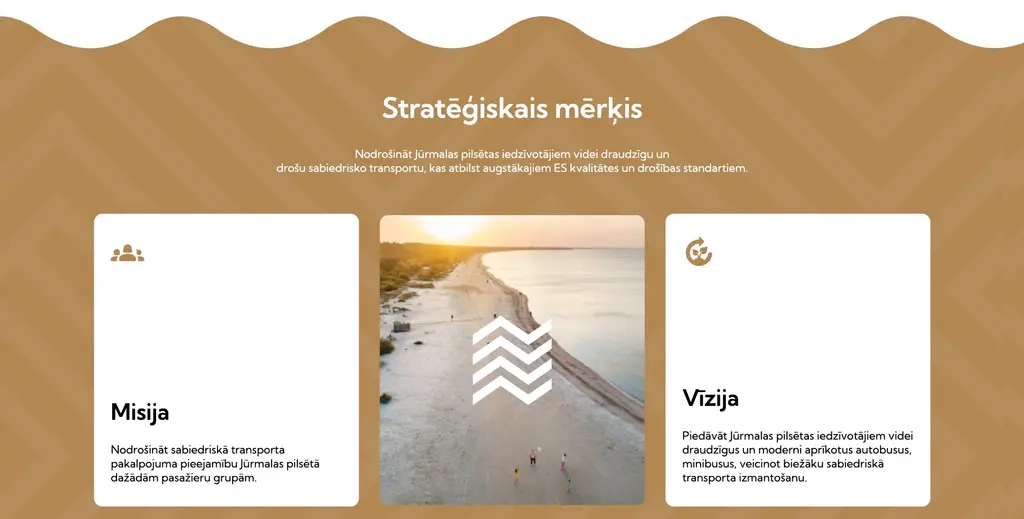 — enlarge image
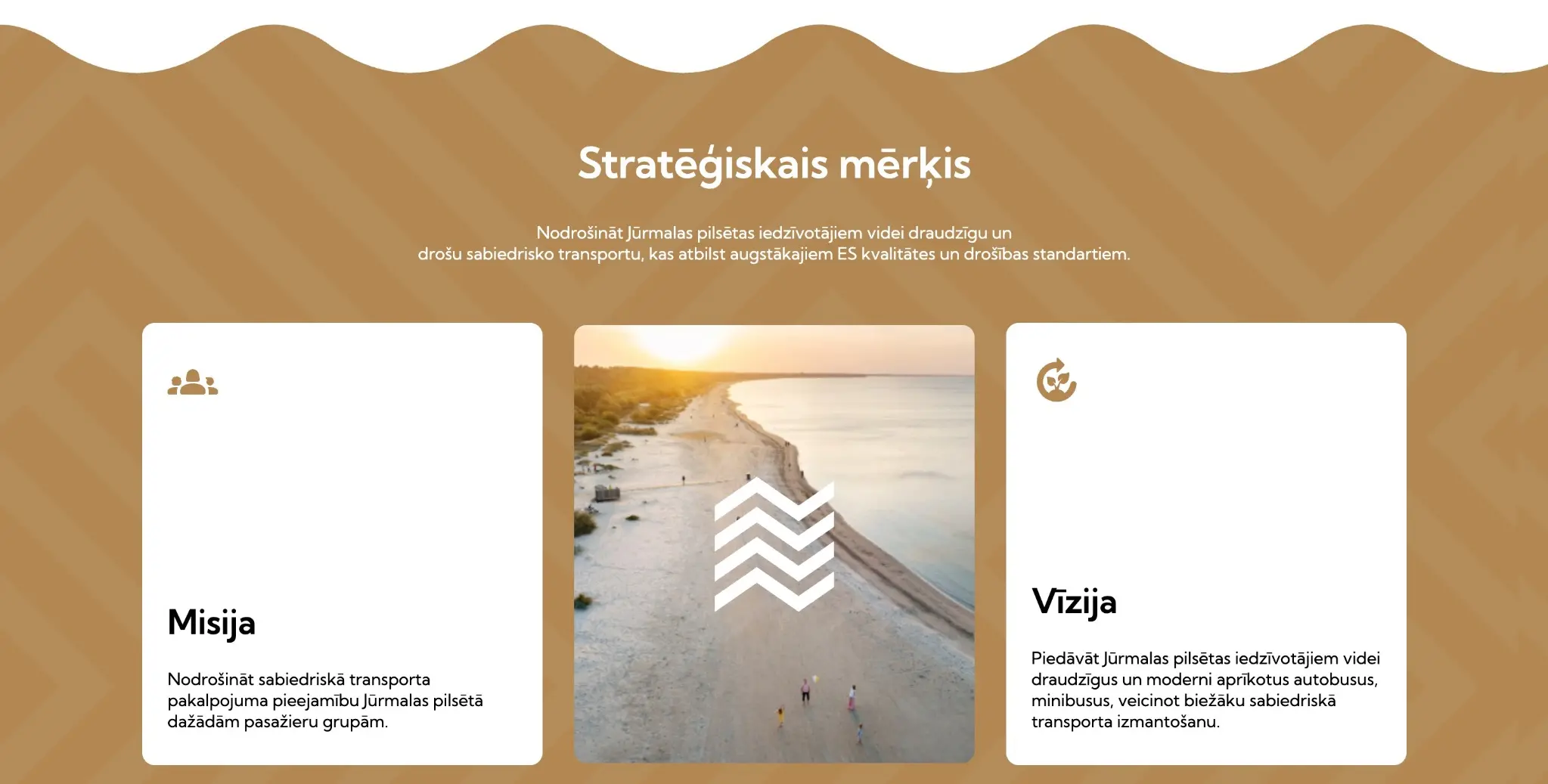
About the company 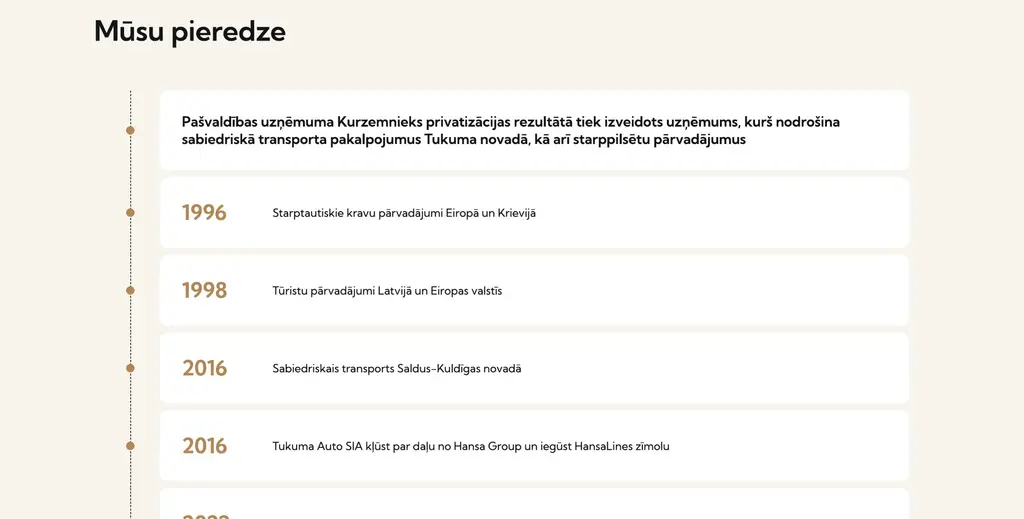 — enlarge image
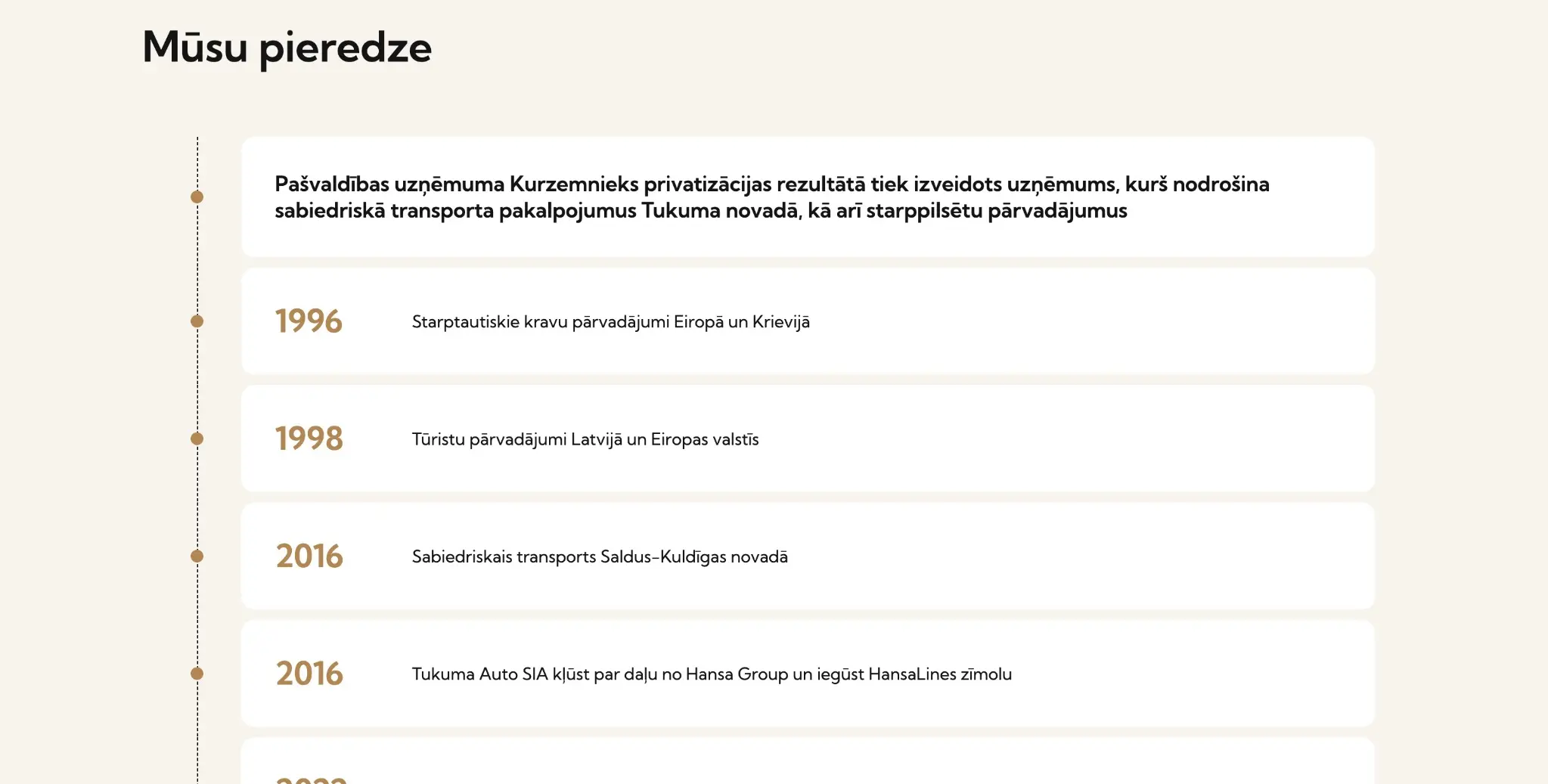
Company history 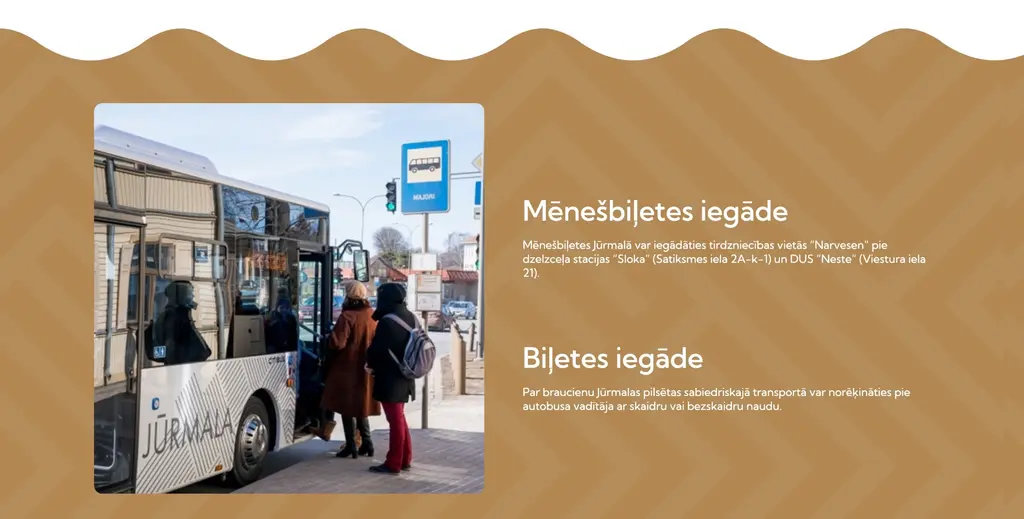 — enlarge image
Buying tickets
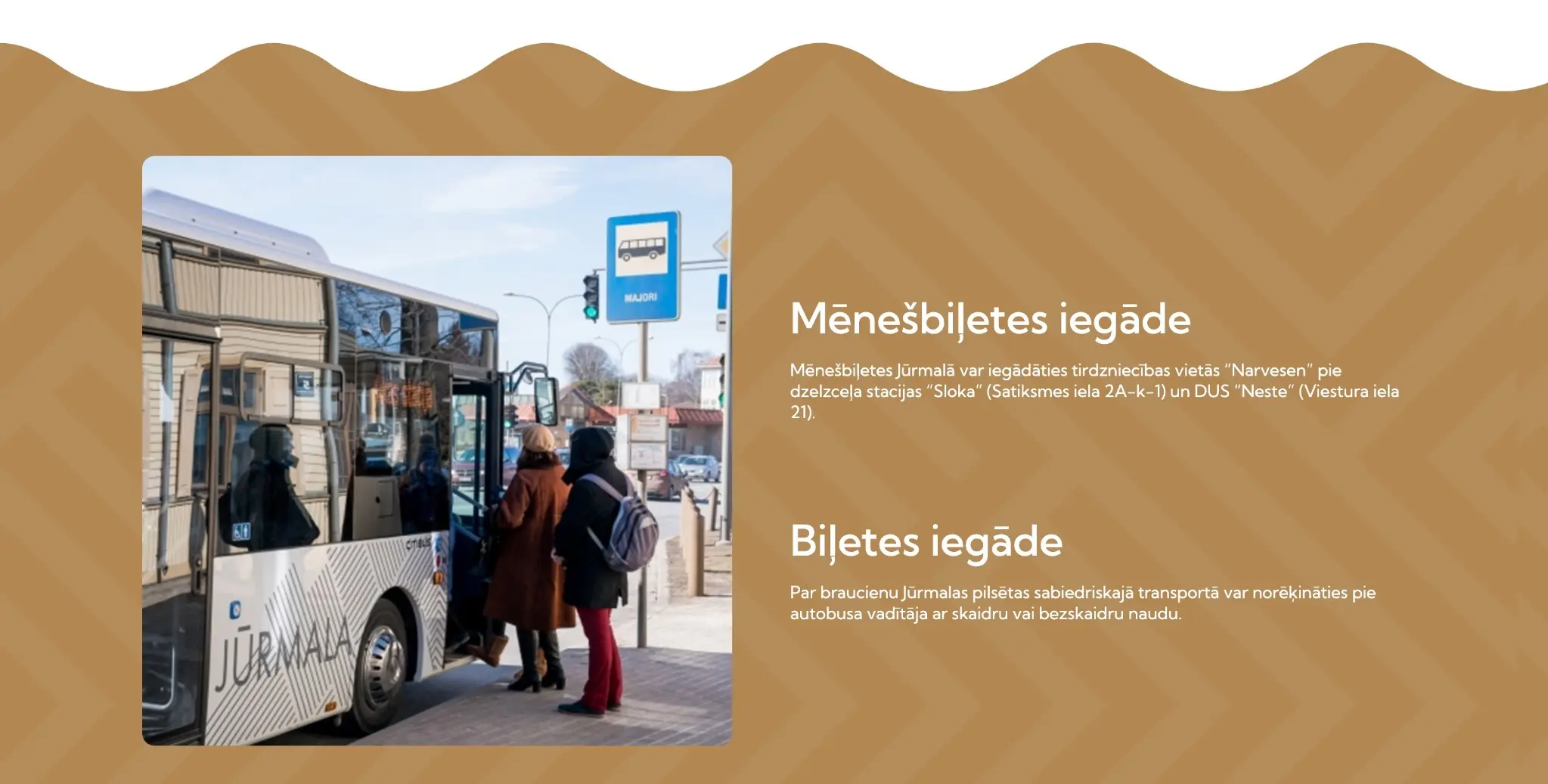
The structure of the Jūrmala public transport website
On the website, passengers can find information about:
- bus routes and timetables;
- tickets and passes;
- the company that provides the public transport services.
Passengers can also contact the service provider on the website. On the current site, the main menu follows this logic — “Kustības saraksts” (Timetable), “Jaunumi” (News), “Biļetes” (Tickets), “Par mums” (About us) and “Kontakti” (Contacts) — so each passenger question has its own section.
GPS integration via an API
GPS integration here means a connection to an external service. The GPS data about the buses comes from a separate GPS service that is not a CREATING.LV development; the carrier’s systems are not our work either. Our work was the integration: we connected the website to this service via its API so that the passenger site could use its data.
An API, or application programming interface, is a defined way in which one system passes data to another. Integration via an API means that the GPS service and the website remain separate systems: data does not have to be retyped on the website manually, and the website’s design or content can be changed without affecting the GPS service itself.
When planning a similar integration, you first need to find out whether the GPS service provider offers an API, what data it provides and how often it is updated. You also need to decide in advance what the site shows passengers if the external service is temporarily unavailable, so that the rest of the information — routes, tickets and contacts — is still visible.
Routes and tickets
The website has a clear routes and timetables section in which passengers find the timetable for the route they need. “Timetable” is the first item in the menu, so passengers find it straight away. The tickets section brings together the types and prices of tickets and passes, for example a monthly pass, so the price can be checked before heading to the stop.
Having ticket and pass information in one place helps compare the options: a regular passenger can work out whether a pass is better value for them, while a visitor to the city who travels rarely sees in the same section which ticket types are available at all.
News and contacting the carrier
On the current site, the news section is the place for the carrier’s announcements to passengers. The “About us” section has information about the carrier, and in the contacts section passengers can contact the service provider. On a public transport site, the news section is useful for short-term notices that do not fit in the permanent timetable, and passengers find them on the same site as the routes and ticket prices.
The current site also has English, Estonian and Lithuanian versions. These appeared on the site after the project was handed over, so they are not described in this portfolio entry as our work.
A custom theme and use on a phone
The site has a WordPress theme we developed ourselves rather than a ready-made template: we created the theme’s page templates and styles specifically for this site, so the layout is built for passenger information — routes, ticket prices, news and contacts — and has none of the ready-made template features this site does not need. The web design is also our work.
The code of a custom theme applies only to this site, so changes to it do not depend on updates from a third-party template developer, and a new section can be added following the existing design.
The interface is built for use on a phone — the responsive design adapts to the screen size, so passengers can check a route or ticket price at the stop or on the way.
How passengers use the site
A typical passenger journey on the Jūrmala public transport website is short:
- they open the site on a desktop or phone and choose a route;
- they check the route in the timetable section;
- they find out the price of a trip or pass in the tickets section;
- they check for service changes in the news or ask the carrier a question in the contacts.
Who this kind of public transport website suits
This kind of solution suits a carrier, a municipal transport service or another service provider that regularly needs to publish practical information for a wide range of users: routes, prices, announcements and contacts. If the carrier already uses a GPS service, a public transport website can use its data via an API, and passengers see it on the carrier’s site.
For the same carrier, Tukuma Auto SIA, we had previously also built a transport company website. More about the platform — on the page WordPress website development; about integrations with other systems — on the page business system development.
Services we used
Website
Note
This portfolio entry reflects the solution as delivered at handover. The current website may have changed.